
Cole Jetton
Biography
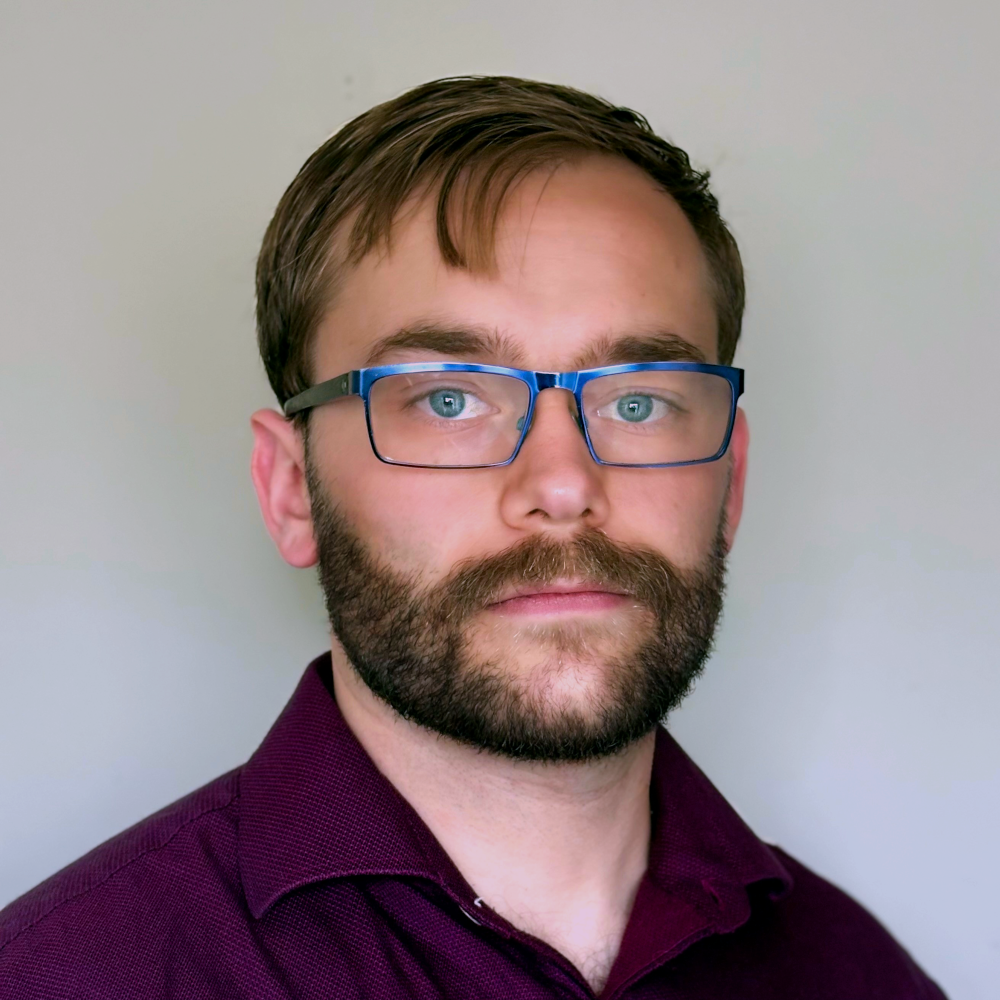
Dr. Cole Jetton is a postdoctoral researcher at Uppsala University working at the intersection of additive manufacturing and artificial intelligence research. He received his Ph.D. in mechanical engineering from Oregon State University where he focused on the applications of Bayesian optimization and agent-based models for mechanical design. He currently researches processes that reduce iterations for the refinement of alloys using image processing, low-data machine learning models, and novel optimization frameworks.
Conferences
Room |
Date |
Hour |
Subject |
|---|---|---|---|
| Room 6 |
25-03-2026 |
3:30 pm – 4:00 pm |
101 A framework for efficient porosity analysis and process parameter optimization in powder bed fusion with laser beam of biodegradable alloys |
Conferences Details
101 A framework for efficient porosity analysis and process parameter optimization in powder bed fusion with laser beam of biodegradable alloys
INTRODUCTION: WE43, a magnesium alloy, has received increasing interest for degradable biomedical implants [1]. Optimizing WE43 and other alloys requires workflows that automate as much of the research as possible to reduce the development cost and environmental impact.
To do so, this work proposes to automate the porosity calculation with a neural network (via a U-net [2]) and model the porosity with a Gaussian process [3], a machine learning model that excels with low sample sizes. The pairing of these two steps represents a novel workflow that can reduce the time required to improve WE43, other alloys for biomedical use, and additive manufacturing research as a whole.
METHODS: A WE43 alloy was printed with 73 process parameter combinations before taking microscopy images to calculate porosity. A U-net was trained using 127 manually annotated images porosity masks, which was then applied to segment pores in the remaining 611 images.
After the U-net calculated porosity, a Gaussian process modeled how the process parameters affected porosity. This interpolates between observations and infers the values at the missing datapoints. The research emphasizes transparency in model validation and includes the exploration into various model types, meaning it can also serve as a guide to other researchers looking to use Gaussian processes.
RESULTS: The U-net helped find a set of parameters that lead to a porosity percentage of 0.06%. Additionally, the use of multiple images helped identify process parameters that would be a robust choice with a lower standard deviation.
Fig. 1: Example of a microscopy image (left) with the U-net porosity segmentation (right)).
The Gaussian process model closely matched the true porosity values, especially in the low-porosity region, and could estimate the porosity values in the missing regions by using the surrounding parameter combinations.
Fig. 2: Extracted (left) and predicted (right) porosity for one hatch distance. This highlights how the Gaussian process models multimodal data and interpolates values for failed prints.
DISCUSSION & CONCLUSIONS: This research demonstrated the advantage of using a U-net with the microscopy images of printed samples to decrease the analysis time. The Gaussian process model captured the porosity trends across the process parameter space with significantly less samples than other machine learning techniques. The workflow presented in this research is not limited for the purpose of analyzing porosity data, but can be applied to other materials to understand their process-structure-property relationships.
REFERENCES:
[1] Cavaliere GP, Shtender V, Mellin P, Persson C, D’Elia F. Powder reuse in powder bed fusion-laser beam of WE43 magnesium alloy: towards sustainable manufacturing of biodegradable implants. Journal of Materials Research and Technology 2025;38:5498–510.
[2] Ronneberger O, Fischer P, Brox T. U-Net: Convolutional Networks for Biomedical Image Segmentation 2015.
[3] Rasmussen CE, Williams CKI. Gaussian Processes for Machine Learning. The MIT Press; 2005.
